Skip to content



Nttitudoo MFG
「Indigo × Kakishibu」- TASOGARE HISHI DONZA JACKET (DR0253)
Couldn't load pickup availability
*Limited-Time Lucky Offer
*Limited editon of 6pcs per size
*Japanese market version open to all markets
Background
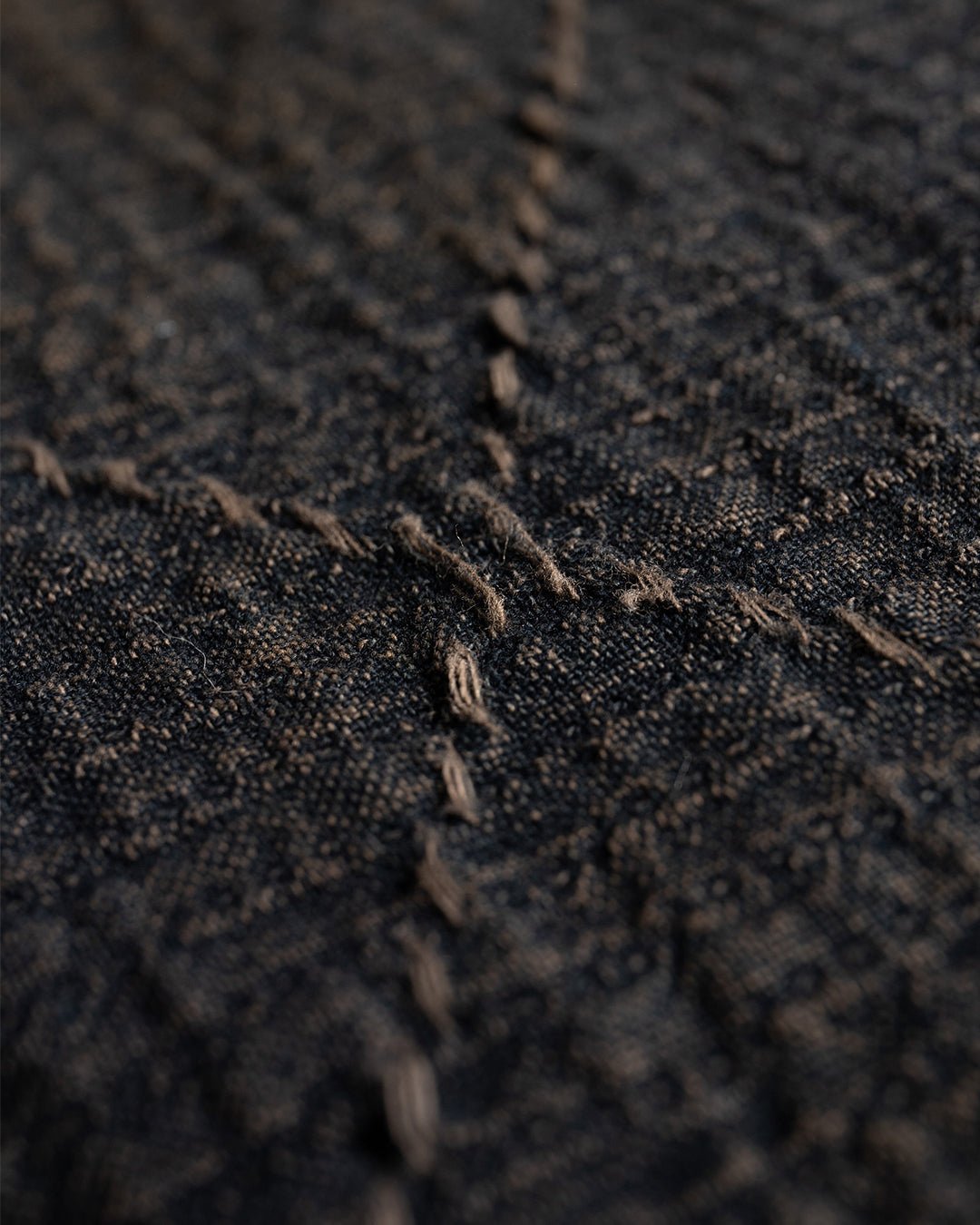
Crafted as a traditional Japanese sashiko jacket, this piece features a unique garment plant dye finish blended from classic Japanese aizome (indigo) and kakishibu (persimmon tannin).
Far from ordinary single-tone dyeing, the fusion of aizome indigo and kakishibu persimmon tannin creates rich, nuanced depth with subtle color variations across every panel.
Each garment carries its own one-of-a-kind patina, as natural plant dyes develop uniquely through the artisanal dyeing process.
The distinctive mottled, aged aesthetic deepens beautifully with wear, maturing into a personalized vintage character over time.


Fabric Details
-Shell: 18oz 100% cotton made in Japan
-Contrast binding: 11oz 100% cotton twill
Design Details
-Par excellence made in Japan
-Handcrafted-garment-dyed with Japanese traditional "soumoku nishoku dyeing"
-Traditional japanese diamond-sashiko crafted shell with check-match finished
-chest pocket
-Twin bulky insert pockets
-Multi binding trim edge
-French-made Yeux-Zip-Yvette® "Âme Poussante"scorched horn buttons
-Vintage garment wash
About 「SOUMOKU NISHOKU DYEING」

A special traditional hand-finished dyeing technique in Japanese craftsmanship, which involves using two different plant-based dyes to color fabrics or garment, resulting in a dual-tone effect. As a unique variation of plant dyeing, it skillfully utilizes natural plant pigments and dyeing methods to create distinctive two-color patterns, characterized by its natural, eco-friendly, and artistic qualities.
PLANT-DYEING MATERIAL

「SUKUMO-DYE」
Sukumo is a natural indigo mud made from the dried leaves of Polygonum tinctorium through long-term anaerobic fermentation. As the core material for traditional Japanese indigo dyeing, it is produced by harvesting indigo leaves in summer, removing stems, drying and chopping them, then piling the leaves in a dedicated fermentation house. The pile is sprinkled with water, kept at around 40°C, turned repeatedly, and fermented anaerobically for about 100 days

「KAKISHIBU-DYE」
Before the beginning of autumn each year, unripe green persimmons are harvested, washed, crushed, juiced, and filtered. The persimmon juice is then fermented and aged for several months or even over a year to produce a deep brown persimmon tannin dye. Traditionally, the dye is buried underground or stored in a cool, shaded place to enhance its colorfastness and stability
*「CARE INSTRUCTION notice」
-Avoid wearing with light-colored garments or washing with other items! Significant color bleeding will occur initially
-Do not pour detergent directly onto the shell in washing
-Dissolve a mild neutral detergent in water before gently immersing the garment
- Gentle hand washing


*All measurements are specific to this product. The best way to determine the size you need is to find a similar item that fits you well, then measure the same way we do (see ''How To Measure'' diagram) and compare with the measurements on the table below. If a specific dimension is important to you (for example, chest size), please ask us to check for confirmation
*Manual measurement may vary by 1–2 cm